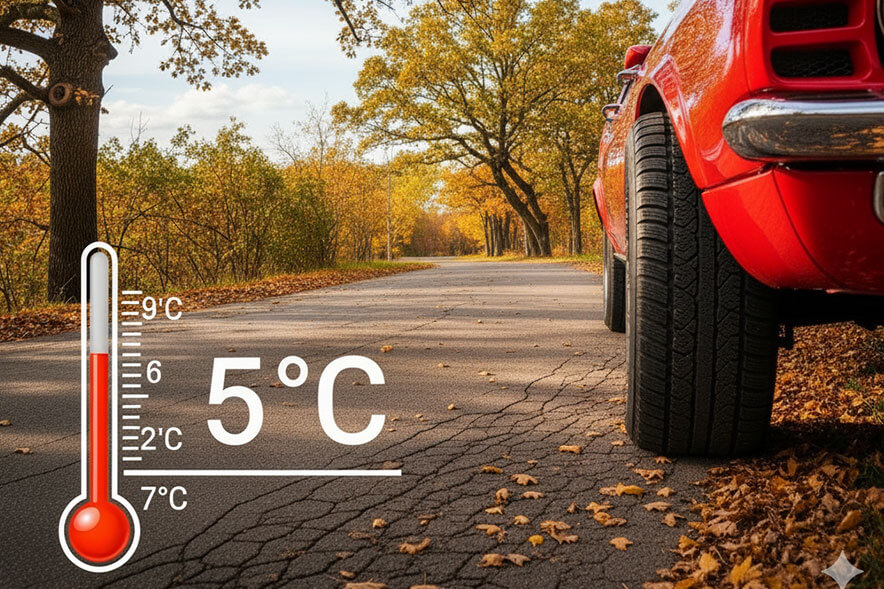
As the leaves change and a crispness fills the Toronto air, many of us start to think about preparing for the inevitable Ontario winter. One of the most critical things you can do for your safety on the road is to switch to winter tires. At AIA Insurance Brokers, we know that proper preparation is key to a worry-free winter, and that includes understanding the “7-degree rule.”
The Right Time to Change Your Tires
The most common and important piece of advice for Ontario drivers is to change to winter tires when the average daily temperature consistently drops below 7 degrees Celsius. This isn’t about the first snowfall; it’s about the temperature. Even on a clear, dry day, the rubber compound in your all-season tires begins to harden and lose its grip when the temperature falls below this threshold. This is why you shouldn’t wait for the first snowflake to fall. The optimal time for most of Ontario, including the Greater Toronto Area, is typically from late October to mid-November.
The Reasons to Make the Switch
You might wonder if winter tires are truly necessary. The answer is a resounding yes, and here’s why:
- Superior Rubber Compound: Unlike all-season tires, winter tires are made with a special rubber compound that remains flexible and soft in cold temperatures. This flexibility allows them to maintain excellent traction, even on dry, cold pavement.
- Enhanced Grip and Braking: Winter tires feature a unique tread design with deeper grooves and thousands of tiny slits called “sipes.” These features work together to bite into snow and ice, providing a significantly shorter braking distance and better control on slippery surfaces. Studies have shown that winter tires can reduce your braking distance on icy roads by as much as 25% compared to all-season tires.
- Improved Handling: The specialized tread patterns of winter tires are designed to channel away slush and water, reducing the risk of hydroplaning and giving you more control when cornering or making sudden maneuvers.
- Insurance Discounts: Many insurance companies in Ontario, including those we work with, offer a discount on your premium if you have four winter tires installed on your vehicle. This incentive, combined with the extended life of your all-season tires from not using them in the winter, makes the investment a smart financial decision in the long run.

Common Myths About Winter Tires
Despite the clear benefits, there are still a few misconceptions that float around. Let’s set the record straight:
Myth 1: “All-season tires are fine for winter, they’re called all-season for a reason.”
Fact: While all-season tires are a good compromise for moderate climates, they are not designed for the harsh conditions of a Canadian winter. They perform best in temperatures above 7°C. Below that, their rubber hardens, and they lose their effectiveness.
Myth 2: “I have an all-wheel drive (AWD) or 4×4 vehicle, so I don’t need winter tires.”
Fact: AWD and 4×4 systems help you accelerate on slippery roads, but they do not help you stop or steer. Your ability to brake and turn relies entirely on your tires’ grip on the road. A vehicle with AWD and all-season tires will not stop as quickly on ice or snow as a front-wheel drive car with proper winter tires.
Myth 3: “I only need to put winter tires on the drive wheels (the front or back two tires).”
Fact: This is a dangerous myth. Putting winter tires on only two wheels can create a significant traction difference between the front and rear of your vehicle. This can cause instability and a loss of control, especially when braking or cornering. For your safety and the safety of others, you must always install a complete set of four winter tires.
At AIA Insurance Brokers of Toronto, your safety on the road is our top priority. Making the switch to winter tires is a crucial step in preparing for the unpredictable nature of an Ontario winter. By understanding the reasons behind the 7-degree rule and debunking common myths, you can make a smart decision that not only protects you and your passengers but can also help you save on your insurance. Drive safe!